There’s a moment that keeps happening in our workshops. A manager who has been using AI to rewrite emails and summarize meetings watches, for the first time, a system that picks up a customer inquiry, pulls the relevant history, checks it against company policy, drafts a response, and routes to a human only when genuine judgment is needed. She goes quiet for a second, then asks: “So what have we been doing until now?”
The answer is: the first step. Using AI the way most organizations still use it today, asking questions and getting answers, was never a mistake. It built familiarity, lowered resistance, and created the early wins that make everything else possible. But in the past year something changed, and most organizations haven’t yet grasped the scale of it.
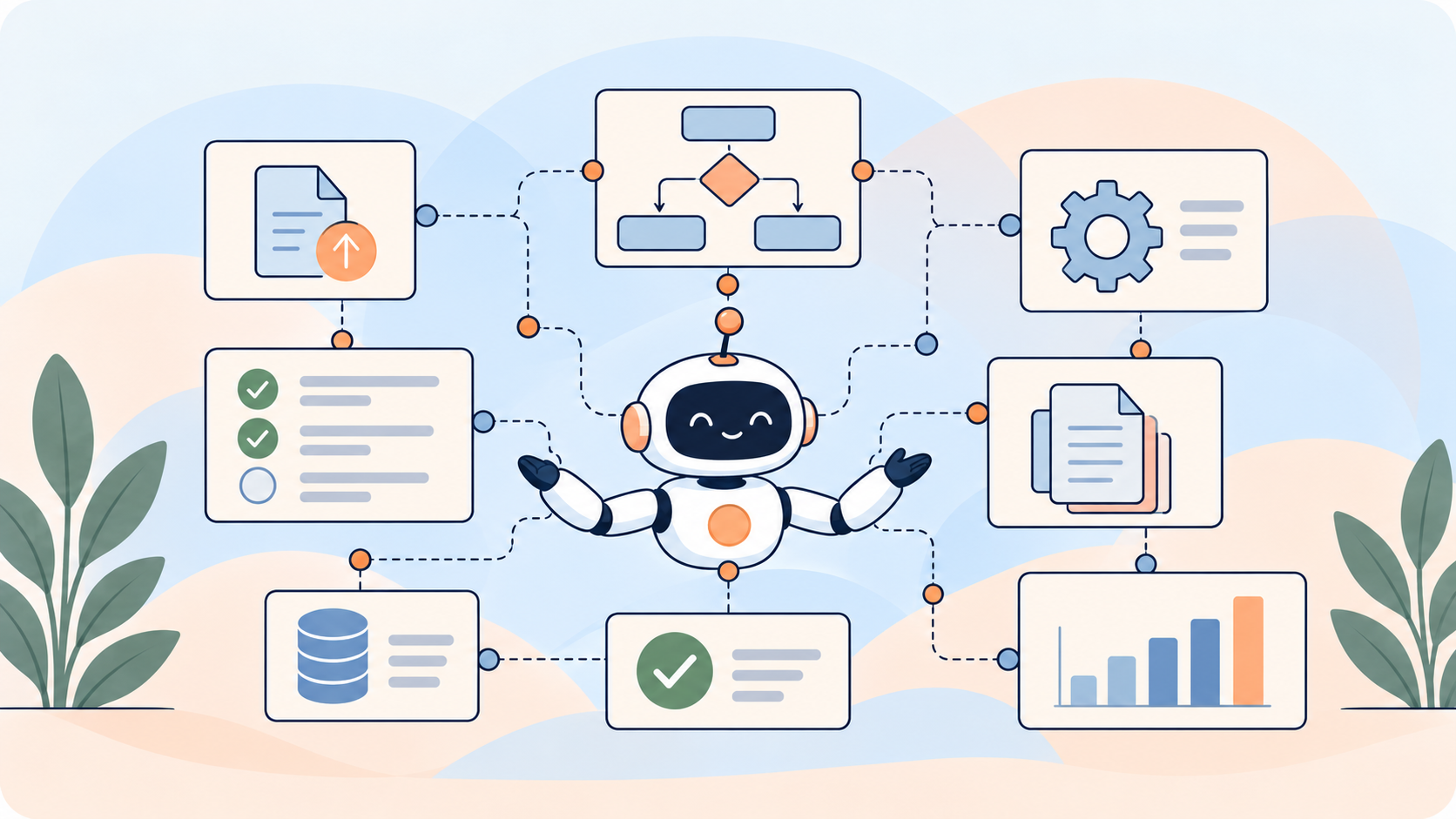
AI moved from answering questions to executing entire tasks. The difference isn’t technical. It’s fundamental. A chatbot waits for you to ask and tries to help. An AI agent takes a task, breaks it into steps, and runs it independently: checking data, making decisions within defined boundaries, executing actions, and escalating only when it needs to. The 2025 MIT AI Agent Index, which documented 30 prominent AI agents, found that the vast majority of them launched or received major agentic updates in 2024-2025 alone, with autonomy levels rising sharply. Enterprise agents that users configure at a basic level are already running at high autonomy once deployed, often triggered by events without any human in the loop.
But the same research reveals something equally important: a significant transparency gap. Of the agents exhibiting the highest levels of autonomy, only a handful disclose any safety evaluations. Developers share far more information about what their agents can do than about how they’re kept in check. This is why the shift from chatbot to agent isn’t just a technology question. It’s also a governance question. An agent that can handle a process end to end needs graduated permissions, human oversight at critical decision points, and clear quality metrics. The organizations getting this right aren’t just deploying agents. They’re building the control layer around them.
The natural question is what it takes to make this leap responsibly. The shift from chatbot to agent starts in the same place every successful AI adoption starts: sitting with teams, mapping the processes that eat their week, and asking a different question than we’re used to asking. Not “where can AI help?” but “what can AI own end to end, and what does human oversight look like at every step?” When the right process is clear and the team understands the value, it creates a real foundation for adoption. From there, the work of planning, oversight, implementation, and continuous improvement begins.
That doesn’t mean the chatbot stage was wasted. For most teams, it was essential. But there’s a difference between a stage you pass through and a stage you stay in without realizing there’s a next one.
AI stopped being just a chatbot.
The organizations translating this shift into workflows are already working differently.