If you were building your organization today, would it look the same?
This question matters more as the capabilities of AI expand. Many organizations already use AI, sometimes at significant scale. Yet that use still happens inside an operating model designed for a time when people were the only ones who could retain context, connect information, apply judgment, and move work from one person to the next.
Those processes were built for good reasons. Knowledge was spread across people and systems. Information moved through meetings and emails. Progress depended on someone remembering what needed to happen next.
When some of those constraints change, the structure built around them can change too.
The 2025 Microsoft Work Trend Index describes an emerging organizational model that combines machine intelligence with human judgment. Microsoft calls it the Frontier Firm, an organization built around teams of people and AI agents. The most useful part of this model is the change in the unit of design. Instead of asking which tool each employee should receive, leaders begin asking how work itself should operate when people and AI systems work together. Read the Microsoft report
That is also the difference between an organization that uses AI and one that is AI Native.
An AI Native organization treats AI as part of its operating layer. AI can retain context, access defined sources, prepare outputs, take action, recognize when work should progress, and route it to the next stage. People set direction, apply judgment, manage complexity, and remain accountable for decisions and their consequences.
Thinking this way requires a different order of questions.
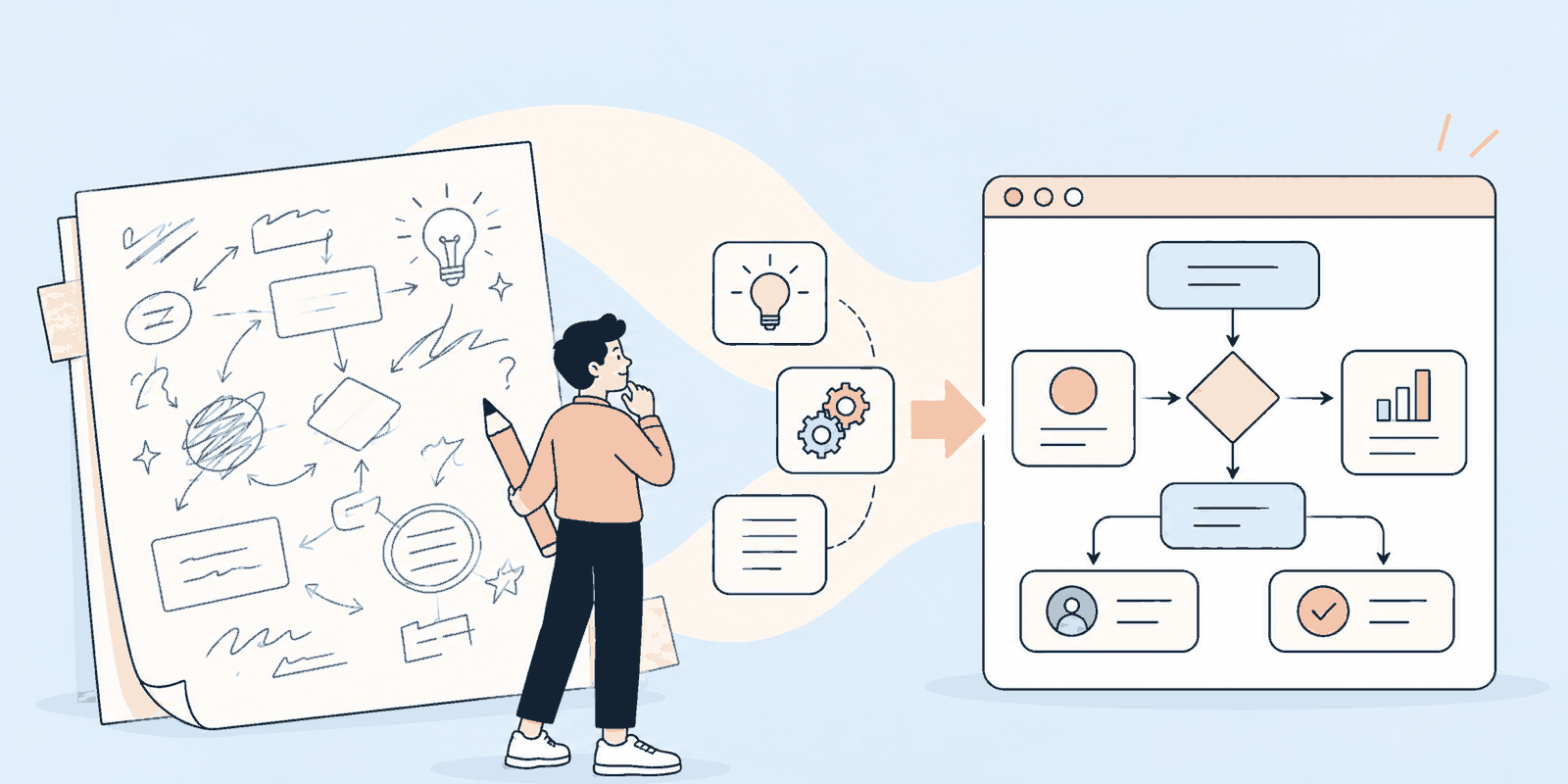
Start with the outcome
The starting point is the result the work should create.
Instead of beginning with how AI could draft an email, summarize a document, or produce a report faster, ask what decision the report should support, who needs to act on it, and what must happen next.
Sometimes the opportunity is to complete an existing task faster. In other cases, several steps can be connected, removed, or redesigned entirely.
The goal is to understand which work still needs to happen before deciding how AI should support it.
Make context available
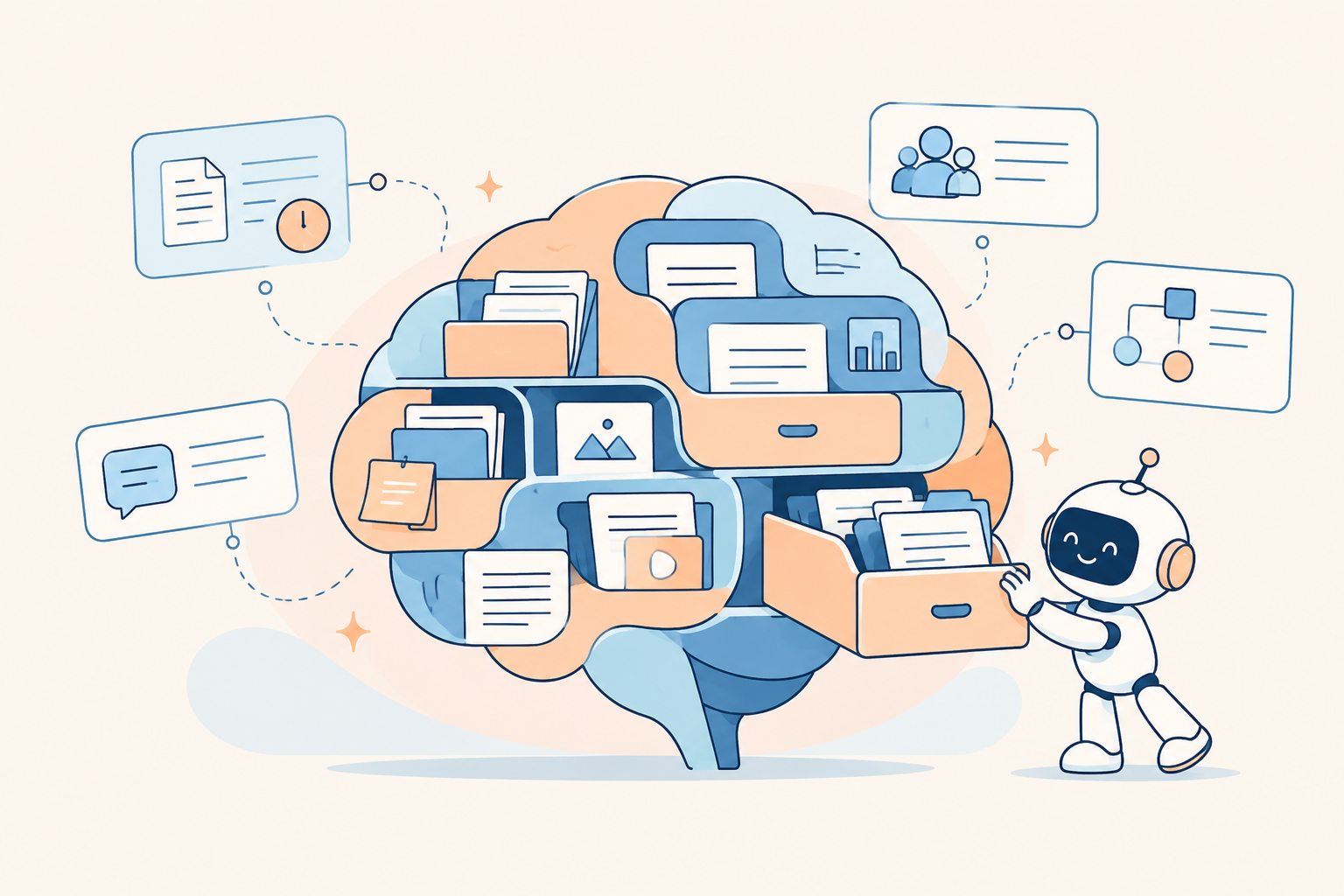
Almost every organizational process depends on context. What happened before? What was promised? Which version is current? Who made the decision? Where is the source of truth? What did the organization learn from similar situations?
When that context lives inside one person’s head, an inbox, or several disconnected systems, even a powerful AI system can only produce a partial answer.
An AI Native organization turns organizational knowledge into active memory. The system does more than store information. It brings the right context into the work at the right moment, connects relevant sources, and carries that context into the next stage.
Before building an agent, the organization needs to define what information it can access, which sources are authoritative, and what happens when those sources disagree.
Define autonomy and responsibility together
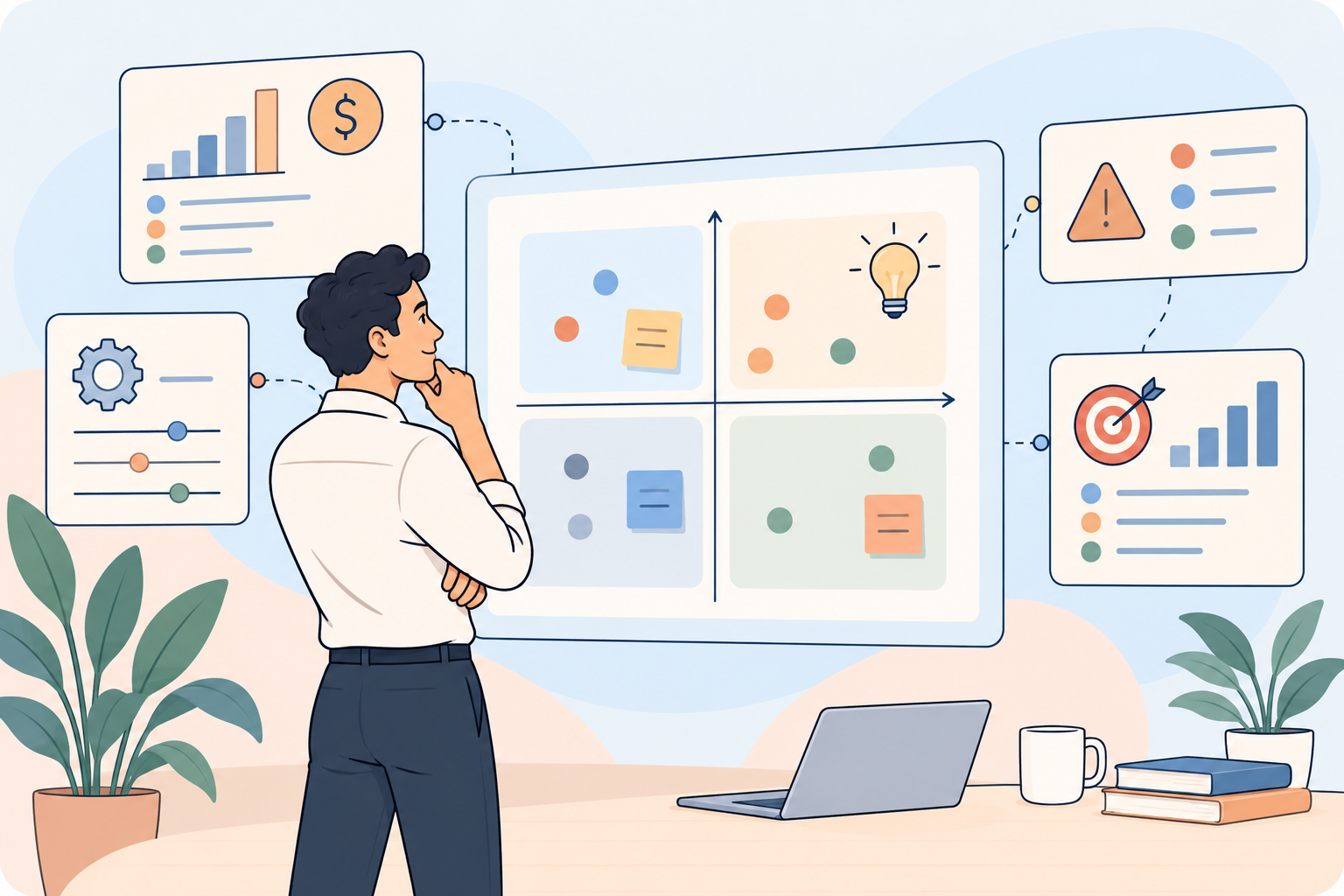
This is the same shift we described in AI Stopped Being a Chatbot: from a tool that answers questions to an agent that carries out tasks on its own. Different parts of the organization need different levels of AI autonomy.
In one process, AI may prepare a draft for a person to approve. In another, it may complete a sequence of actions within defined boundaries. In some cases, it may run independently until it identifies an exception that requires human judgment.
The important distinction is between different types of responsibility.
Information gathering, source comparison, preparation, monitoring, and predefined actions can often be handled by AI. External communication, commitments, sensitive decisions, budget changes, and unusual situations require clear human ownership.
As AI receives more autonomy, the organization needs greater clarity about who is accountable, what the system is allowed to do, and when it must stop.
Design how work moves across the organization
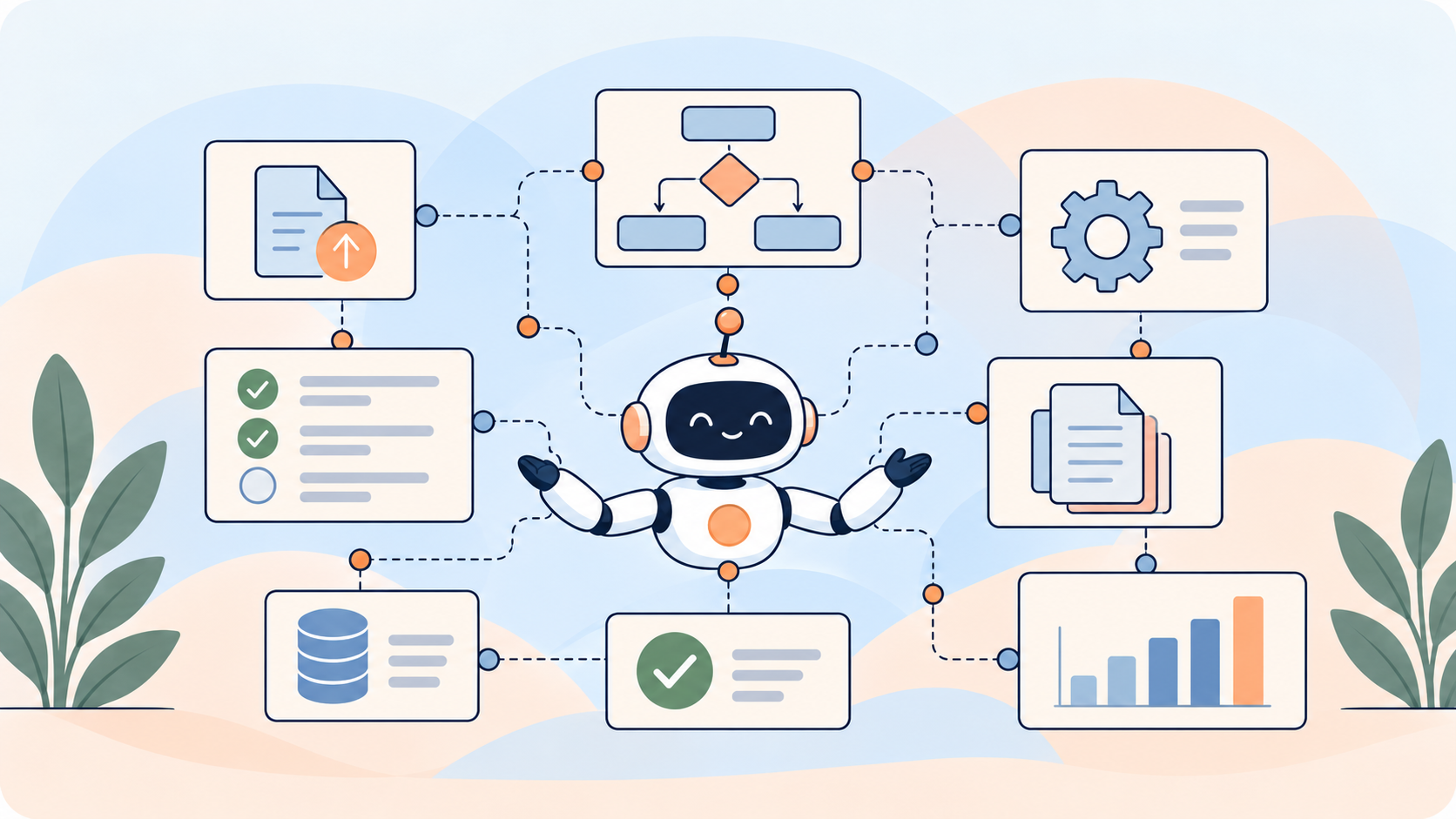
An agent that performs one task well can save time. An operating layer that connects agents, information sources, and areas of responsibility can change how the organization works.
This is where orchestration becomes important.
The system needs to understand more than how to produce an output. It should also know what the output enables, where it should go, and what needs to happen next.
Research can flow into marketing. A meeting can trigger operational preparation. A proposal can initiate delivery planning. A customer request can reach the person with the authority to make the relevant decision.
Without these connections, organizations create isolated pockets of efficiency. Individual tasks become faster, while the wider process still depends on manual handovers, reminders, and the person who holds the full picture.
Build security, governance, and measurement into the design
Security and governance are part of the operating model from the beginning.
Every agent should have appropriate permissions, use defined information sources, and remain within the actions the organization has approved. Ownership should be clear. Outputs should be reviewable. Decisions should be traceable. The organization also needs a way to respond when information, policies, or capabilities change.
Measurement belongs in the same design.
Time saved matters, but it is only one signal. Organizations should also examine cycle time, decision quality, continuity, dependence on specific people, and the business result the process creates.
The number of agents is not the measure of an AI Native organization. The measure is whether the organization can remember more, move work forward more reliably, and use human attention where it creates the most value.
Begin with one real workflow
Choose one piece of work with a clear outcome and map it from beginning to end.
Identify the decisions, information sources, transitions, exceptions, and points of human responsibility. Only then decide which AI capabilities are required and how they should connect.
The first step is to build one complete flow that works well, uses the right context, operates within clear boundaries, and produces a result that can be measured.
From there, the organization can expand. One process, then another. More connections. More active organizational memory. Gradually, AI becomes part of how the organization remembers, decides, and acts.
An AI Native organization begins with a different assumption about how work can move.
Once that assumption changes, the question is no longer which tool to add. It is what kind of organization you can build now. If this question is relevant to your organization, our AI implementation solutions are a place to start.