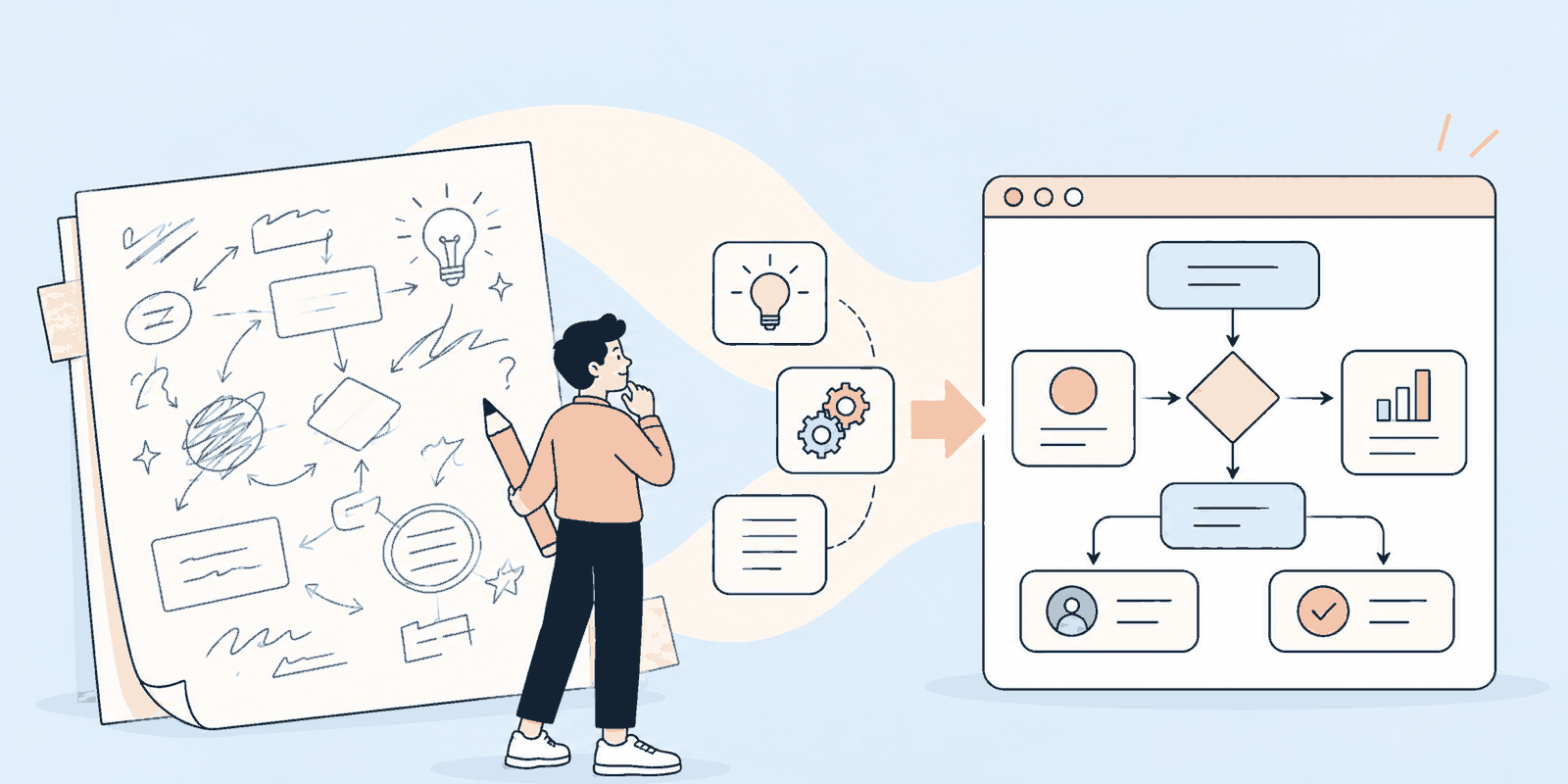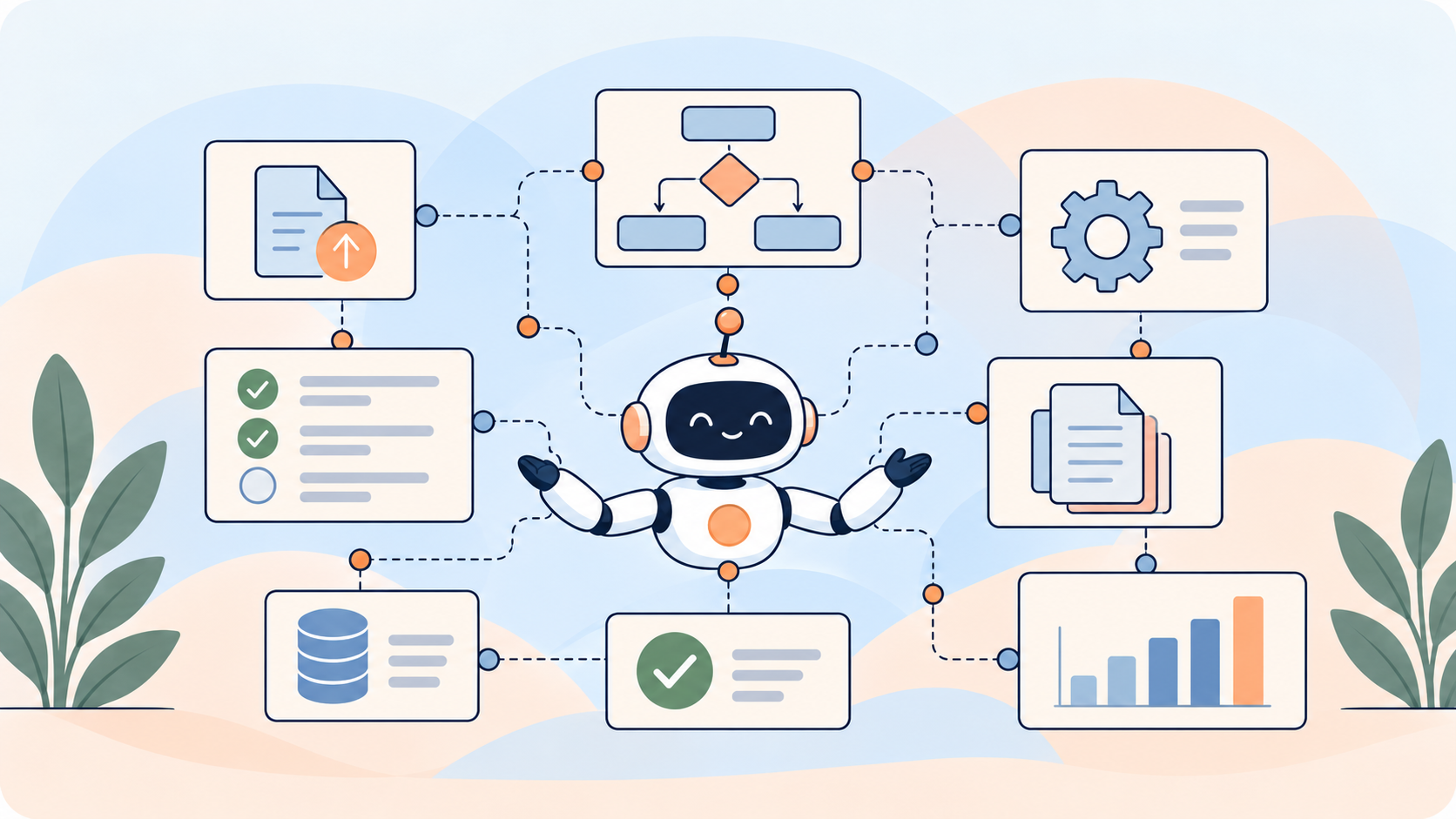
In the last two years, getting AI capabilities into an organization became remarkably easy: the tools are accessible, training is available, and a pilot can be running within weeks. But precisely because getting in became easy, the real gap is now showing: many organizations hold impressive capabilities without any business value emerging from them.
That gap is not random. The road from technological capability to business value runs through five steps, and each one stalls for a different reason. Which is why the question that matters most is not how many capabilities you have, but which step you are standing on.
1 · A real business need. Not “where can we add AI”, but which problem is worth solving. This step stalls when you start from the tool. What moves it: a defined problem, and a desired outcome you can state in one sentence.
2 · A solution that fits the need. Sometimes that is training, sometimes simple automation, and sometimes a process change with no AI in it at all. This step stalls when the solution is chosen for being new rather than for being needed.
3 · Use that becomes routine. The tool exists. The question is whether people actually work with it inside their week. This step almost always stalls on uncertainty, not on skill. What moves it: clarity. What is allowed, when it is worth using, and who sees what.
4 · A change in the work process itself. The easiest step to miss. You can use a new tool inside an old process and gain almost nothing. The question that moves it: if we were building this process today from scratch, with the tools we now have, would it look like this?
5 · A result someone can point to. Something a manager truly cares about has moved: time, quality, cost, satisfaction. If you cannot say what changed, go back one step. The answer is usually there.
Why does knowing your step matter? Because an organization convinced it has a usage problem, when in fact the process never changed, will invest in exactly the wrong place. Another workshop will not help a team whose process needs redesigning, and process redesign will not help people who do not yet feel safe.
Once you know where you are, the next move becomes clear. It is usually smaller than you feared.
A successful adoption is not the one that brings in the most tools.
It is the one that knows, at every moment, which question it is answering.