Last month we sat in a meeting with a VP of Operations at a large industrial company. She had a spreadsheet open with 14 AI platforms, scored across 23 criteria. Her team had been working on this comparison for five months. Five months of demos, security reviews, vendor calls, and internal debates. And they still hadn’t decided.
Meanwhile, a mid-level manager in her own organization had quietly started using a basic AI tool to summarize weekly client reports. It took him an afternoon to set up. Within three weeks, his team was saving six hours a week and catching issues they used to miss entirely.
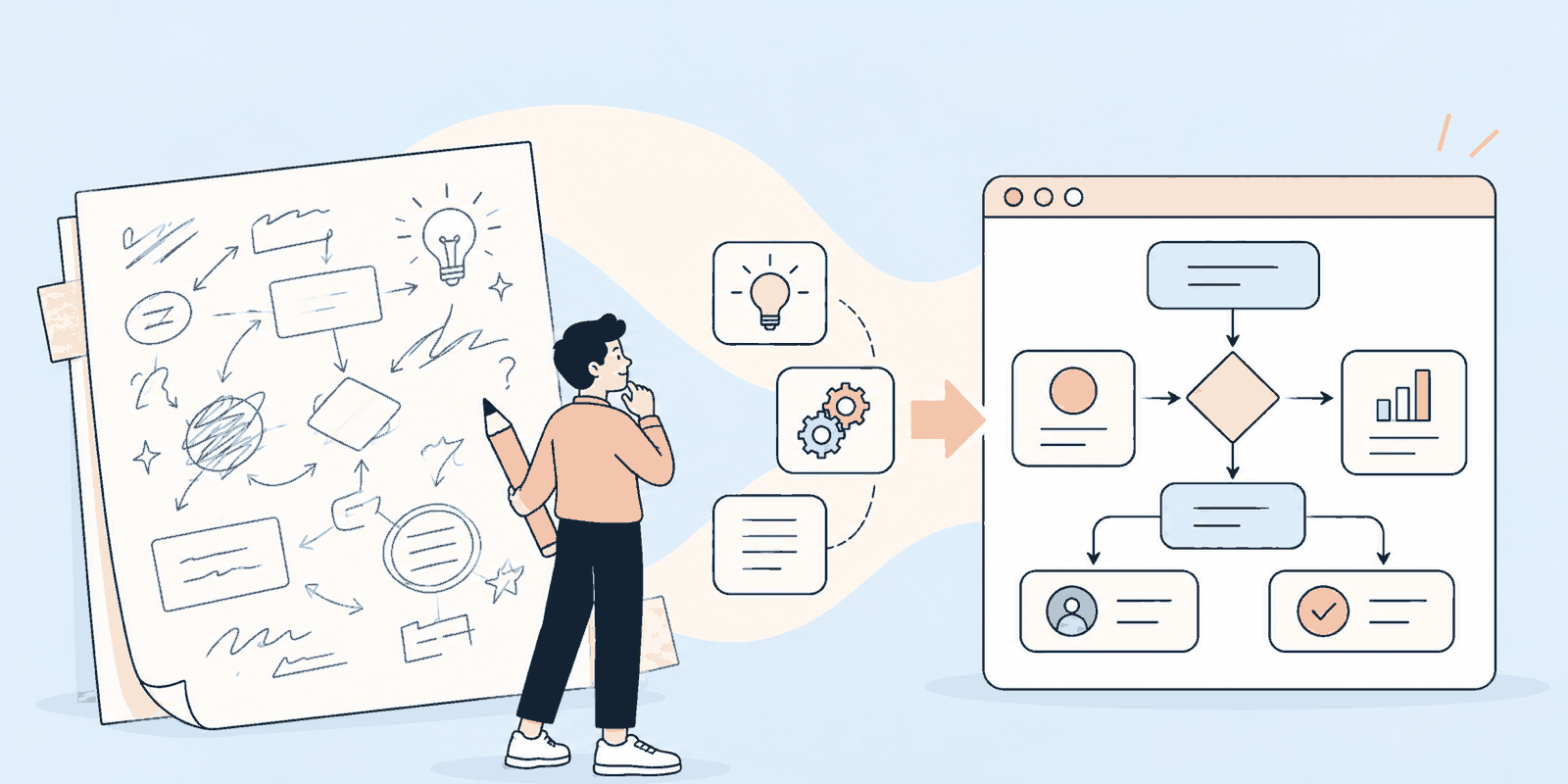
This is a pattern we see constantly. Organizations treat AI adoption as a procurement decision when it’s actually a work design decision. They pour months into finding the “right” platform before they’ve answered a much more basic question: what specific problem are we solving, and for whom?
The numbers back this up. MIT research found that 95% of enterprise AI pilots fail to deliver measurable business impact. Not because the technology didn’t work, but because the pilots were built around tools, not around real business pain.
And the real cost isn’t the subscription fees. It’s the organizational momentum that evaporates while everyone waits for the “official” solution, and the window of willingness that closes because people start associating AI with “that project that never launched.”
From working with over 400 organizations across industries, we’ve noticed that the ones who actually move forward share a common trait: they start from the pain, not from the tool. They identify a process that hurts, a bottleneck that costs real money or real time, and they ask a simple question: can AI help with this specific thing? Then they test it. Small. Fast. With the people who actually do the work.
This doesn’t mean you shouldn’t evaluate tools or think about security and governance. Of course you should. But those tracks can run in parallel. The evaluation doesn’t have to block the learning. And the learning is what builds the organizational muscle you’ll need when you do roll out that enterprise platform.
The most expensive AI mistake isn’t choosing the wrong tool. It’s spending so long choosing that your organization forgets why it wanted to change in the first place.